You Are Not a Sh%*ty Parent

You yelled today. Maybe you slammed a cabinet door a little too hard, or said something in a tone you’d never want your kid repeating back to you in the same manner. Or your kid said something and you heard your own voice echoed back at you. And now you’re lying awake running the highlight reel of everything you did wrong, building a case against yourself with all the evidence you can find as to why your kid will need intensive therapy some day because of YOU.
Here’s the interruption to that thought: one bad moment is not a verdict. It’s just data.
The lie perfectionism tells you
Somewhere along the way, a lot of us picked up the idea that good parents don’t lose it. That patience is a trait you either have or don’t, and every raised voice is proof you’re missing it. That’s not how humans work, and it’s definitely not how tired, under-resourced, still-healing-from-their-own-childhood humans work.
Peace isn’t a personality you’re born with — it’s a practice, and practices include the reps you’d rather forget.
The parents doing real damage aren’t the ones who feel sick about the day they snapped.
They’re the ones who never wonder about it at all. The fact that you’re replaying it, that it bothers you, that you’re reading a blog post called “You Are Not a Shitty Parent” at 11pm — that’s the opposite of the problem. That’s the muscle working.
What actually matters
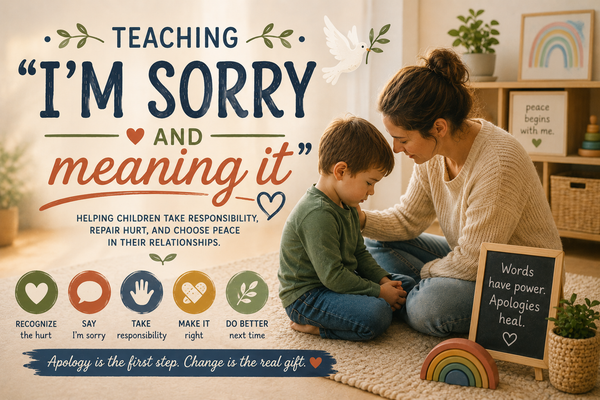
Kids don’t need a parent who never messes up. They need a parent who shows them what happens after a mess-up: that people can lose their temper and still come back, take responsibility, and repair. That’s not a consolation prize for parents who aren’t perfect — it’s arguably a more valuable lesson than never seeing a crack in the first place.
A kid who watches you say “I yelled, and that wasn’t okay, I’m sorry” is learning something about accountability that a kid with a flawless-seeming parent never gets to see.
So repair the moment if you can.
Get low, say what happened plainly, skip the over-apologizing that makes your kid comfort you. Then let it go. Not because it didn’t matter… but because dragging it around for the next three days doesn’t make you a better parent — it just makes you a more exhausted one, which makes the next hard moment more likely, not less.
You are allowed to be a work in progress. Your kid isn’t looking for a finished parent.
They’re looking for one who keeps getting back on the train.