Why I Use AI in My Children’s Content
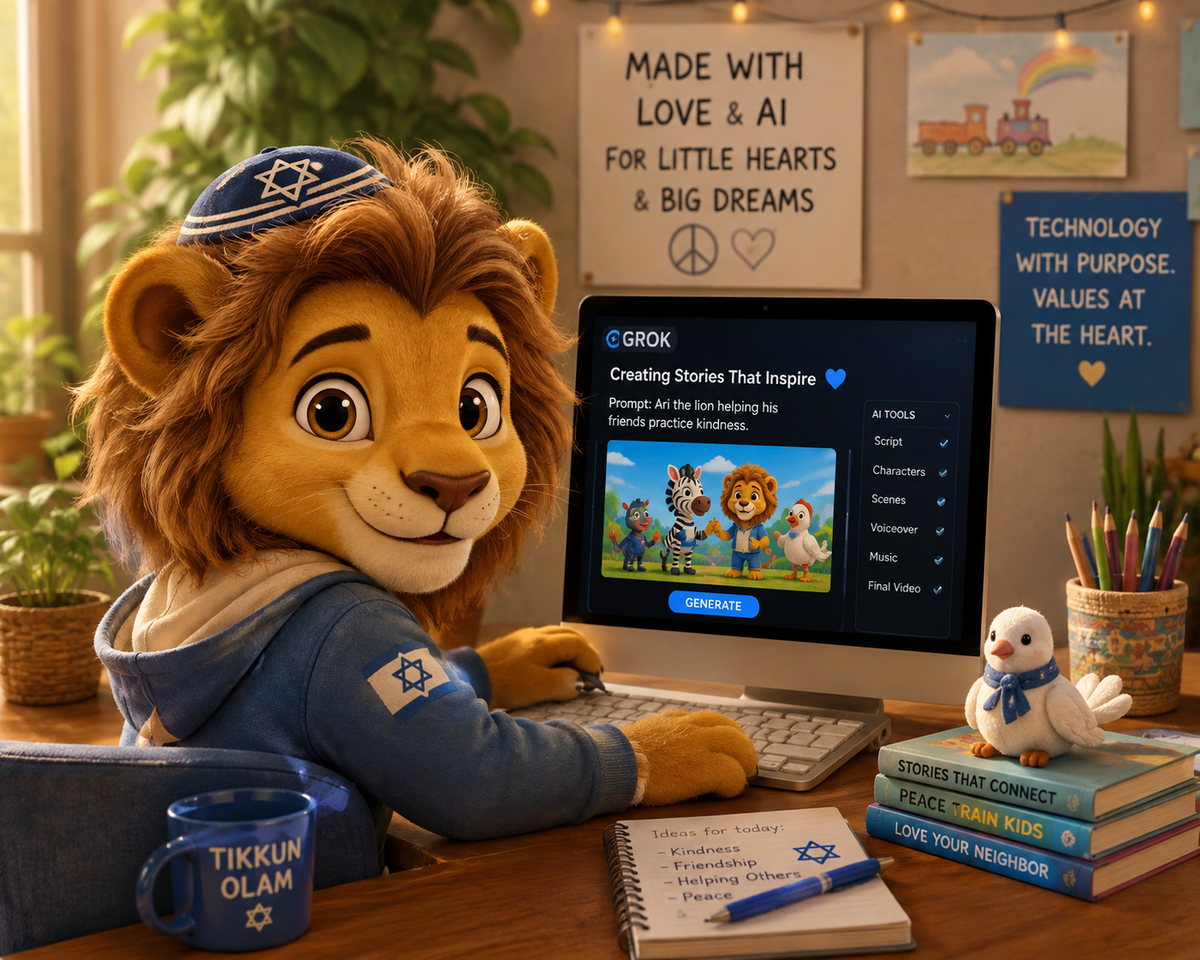
I know it’s a hot-button topic. I know some parents in this space — people I respect and admire— have made a point of avoiding AI entirely, treating it as a line they won’t cross. I want to explain why I’ve made a different choice, and why I don’t think that choice is any less ethical than theirs.
Because the story I want to tell doesn’t come with a million-dollar budget.
Peace Train Kids exists because I believe preschoolers deserve content that teaches them how to resolve conflict without violence, how to sit with big feelings, and how to treat people who are different from them with curiosity…instead of fear. That’s the whole mission, to teach pacifist principles to preschoolers in the hopes of making a better world. Nobody was going to hand a first-time creator with no studio, no animation team, and no network deal the resources to build a world like Harmony Hollow from scratch and I, unfortunately, do not possess the artistic talent, musical talent, or animation talent it would take to make this world a reality.
A theme song used to mean studio time and a composer. A cast of characters with real visual identity used to mean an illustrator on payroll…for months. Twenty years ago, telling this story the way it deserved to be told simply wasn’t available to someone like me. It was available to studios with millions of dollars behind them — which meant the stories that got told were the stories those studios decided were worth funding, which often means patriotic stories of the leading political party or dominant ruling class rather than stories designed to inspire equality and peace.
AI didn’t lower the bar for what counts as a good story. It lowered the cost of entry for who gets to tell one.
“Not using AI” isn’t automatically the ethical choice.
I think there’s an assumption floating around that avoiding AI is the responsible, values-driven position, and using it is a compromise because of the very real damage it can cause to the environment. I understand the impulse — those are real concerns worth taking seriously, and I don’t dismiss them. They deserve an honest conversation .But I don’t think the math is as simple as “AI = ethically compromised, no AI = ethically clean.”
Here’s what that framing leaves out: gatekeeping by budgetary constraints isn’t neutral either. When the only stories kids get to see are the ones that could clear a million-dollar production cost, we’re not protecting children from something harmful — we’re just letting the biggest checkbooks decide what values get modeled for the next generation.
If avoiding AI means a message about peacemaking, nonviolent conflict resolution, and radical kindness never reaches a single kid because I couldn’t afford to make it any other way, I don’t think that’s the more ethical outcome. I think it’s a worse one.
Because Peace Train Kids exists to teach kids things I consider too important to leave untaught: that conflict doesn’t require a winner and a loser, that big feelings are survivable, that the people who seem different from you are still worth understanding. I’m not going to let a perceived purity test about tools keep that lesson from reaching a preschooler because I couldn’t afford an animation studio.
I use AI the way I use a paintbrush I didn’t personally forge — as a tool that lets me put a story into the world that would otherwise have stayed in my head. The story, the values, the character of the conductor stepping off the train to sit with a kid who’s upset — that’s still mine. That’s still the work.
I’m not asking every creator to make the same call by any means. I understand why some parents want their kids’ content to come from human hands alone, and I respect that instinct.
But I’d ask the same grace in return: don’t assume that because I used AI to help build Harmony Hollow, the story matters less, or that I care less about what it teaches. If anything, I think I care enough to use every tool available to make sure the lesson actually gets told.